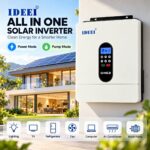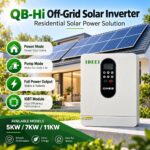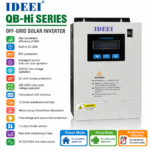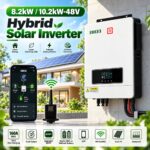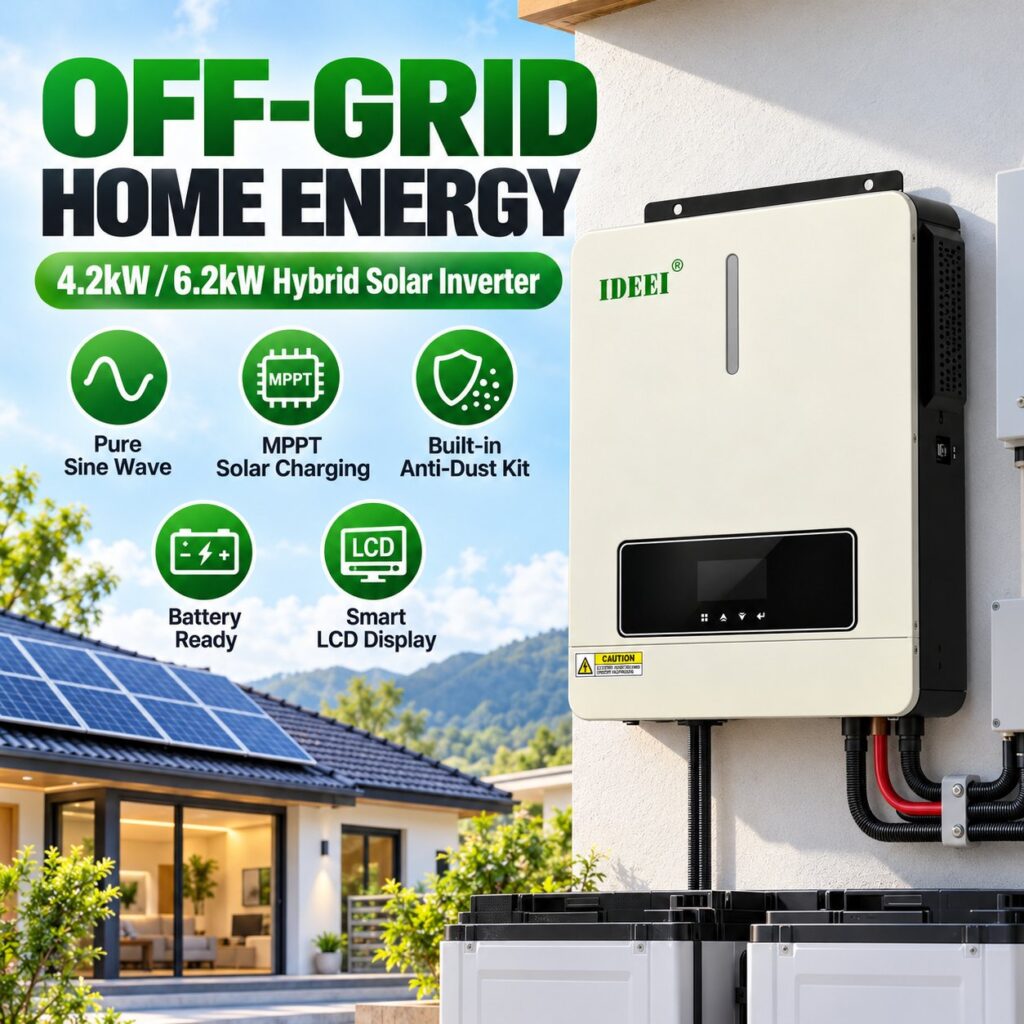
IDEEI QB42-24 (4.2kW, 24V) and QB62-48 (6.2kW, 48V) hybrid solar inverters deliver pure sine-wave 230V AC with 90-430V MPPT input and 120A charging, for home and remote loads with or without batteries.
The QB42-24 is a 4.2kW hybrid inverter for photovoltaic, battery and AC-backup energy systems, with grid-tie hybrid mode and off-grid mode selectable on the LCD. Its verified sheet lists a 24V DC battery class, high-voltage MPPT input and pure sine-wave 230V output. It runs with or without a battery bank: in hybrid mode excess solar feeds the grid, and in off-grid mode it covers home and remote loads. Final source priority and communication options must match the selected configuration.
The QB42-24 runs a 24V DC battery system for smaller, defined load lists, while the QB62-48 steps up to 48V DC for family homes and offices. Choose the voltage by the load list, not by price alon: moving from 24V to 48V later means replacing the inverter, not just adding batteries.
Both models share a 90–430V DC MPPT range with 120A solar charging, but the array ceiling differs: 4,500W on the QB42-24 and 6,500W on the QB62-48. Size the array to the model in the table, not to the headline kilowatts.
Off-grid mode is the default and grid-tie hybrid mode is LCD-selectable; in hybrid mode excess solar feeds the grid. Both models also run battery-free in daytime when the available PV or AC source can carry the load, with a 10ms typical transfer time in UPS mode and 20ms in appliance mode.
QB42-24 delivers 4,200W at 230V AC ±5% pure sine wave; QB62-48 delivers 6,200W. Match the order by rated output, battery class and maximum PV array in the Verified Model Selection table.
The table separates verified published data from project-dependent choices. Match the product by electrical ratings and application conditions; do not select from the headline power value alone.
| Model | Rated output | Battery class | Maximum PV array | MPPT range | Solar charge current |
|---|---|---|---|---|---|
| QB42-24 | 4,200W | 24V DC | 4,500W | 90-430V DC | 120A |
| QB62-48 | 6,200W | 48V DC | 6,500W | 90-430V DC | 120A |
| Item | Verified specification |
|---|---|
| AC output | 230V AC ±5%, pure sine wave |
| Output frequency | 50Hz |
| Maximum PV open-circuit voltage | 450V DC |
| MPPT range | 90-430V DC |
| Transfer time | 10ms typical UPS mode; 20ms typical appliance mode |
| Operating temperature | -10°C to 50°C |
| Ingress protection | IP21 stated on product sheet |
| Operating modes | Off-grid mode (default) and grid-tie hybrid mode, LCD selectable; hybrid mode feeds excess solar to the grid |
A dependable quotation requires the complete operating profile, not only the nominal power. IDEEI reviews voltage, current, source or motor data, duty, environment, required options and destination together so the final configuration, accessories, protection devices and commercial scope can be stated clearly.
Separate continuous load from startup surge loads such as pumps, compressors and motors. Check the PV string at the lowest expected temperature so open-circuit voltage remains below the product limit. Where a battery is used, match chemistry, nominal voltage, charge current and communication protocol. Source priority, transfer behavior, neutral arrangement and generator compatibility must be confirmed for the complete system.
Installation and commissioning must be completed by qualified electrical personnel. Isolate all energy sources before wiring, verify terminal functions against the current manual, provide protective devices and grounding, and apply the published derating guidance for altitude, temperature, enclosure and cable length. Product-page data supports preliminary selection and does not replace project engineering or local code compliance.
Yes. The QB42-24 and QB62-48 run with or without a battery bank. Without batteries, daytime loads run from PV (and utility or generator where connected) as long as the available source can support the connected load; battery-free operation provides no night-time backup. Confirm the intended operating mode before wiring.
Use the selected model’s permitted PV voltage window and maximum open-circuit voltage. Check cold-weather Voc, operating Vmp, current, total array power and local irradiance rather than selecting from inverter kW alone.
Supported AC input and source-priority modes depend on the selected series. The transfer arrangement, protection devices and neutral/earthing scheme must be confirmed for the installation.
Communication is model- and project-dependent. Confirm Wi-Fi, GPRS, RS232, RS485 and the required lithium-battery protocol before ordering.
Send the load list, surge loads, required output voltage and phase, PV module data, battery information, backup-source data, operating schedule, quantity and delivery country.
Send the required electrical and application data, quantity and destination. Our team will confirm the suitable model, options and quotation scope.
Request a Quote
Email Us
WhatsApp
Email: [email protected] · WhatsApp: +86 183 5724 1165
For the voltage decision in full, see our Hybrid Solar Inverter Buying Guide 2026 — it compares 24V and 48V battery systems across the QB range from 4.2kW to 10.2kW.
Also see our new battery-sizing guide: 24V vs 48V Battery Sizing for QB Hybrid Inverters
Questions about model selection, bulk pricing or shipping? Chat with us directly.
Start WhatsApp Chat →Questions about model selection, bulk pricing or shipping? Chat with us directly.
Start WhatsApp Chat →