
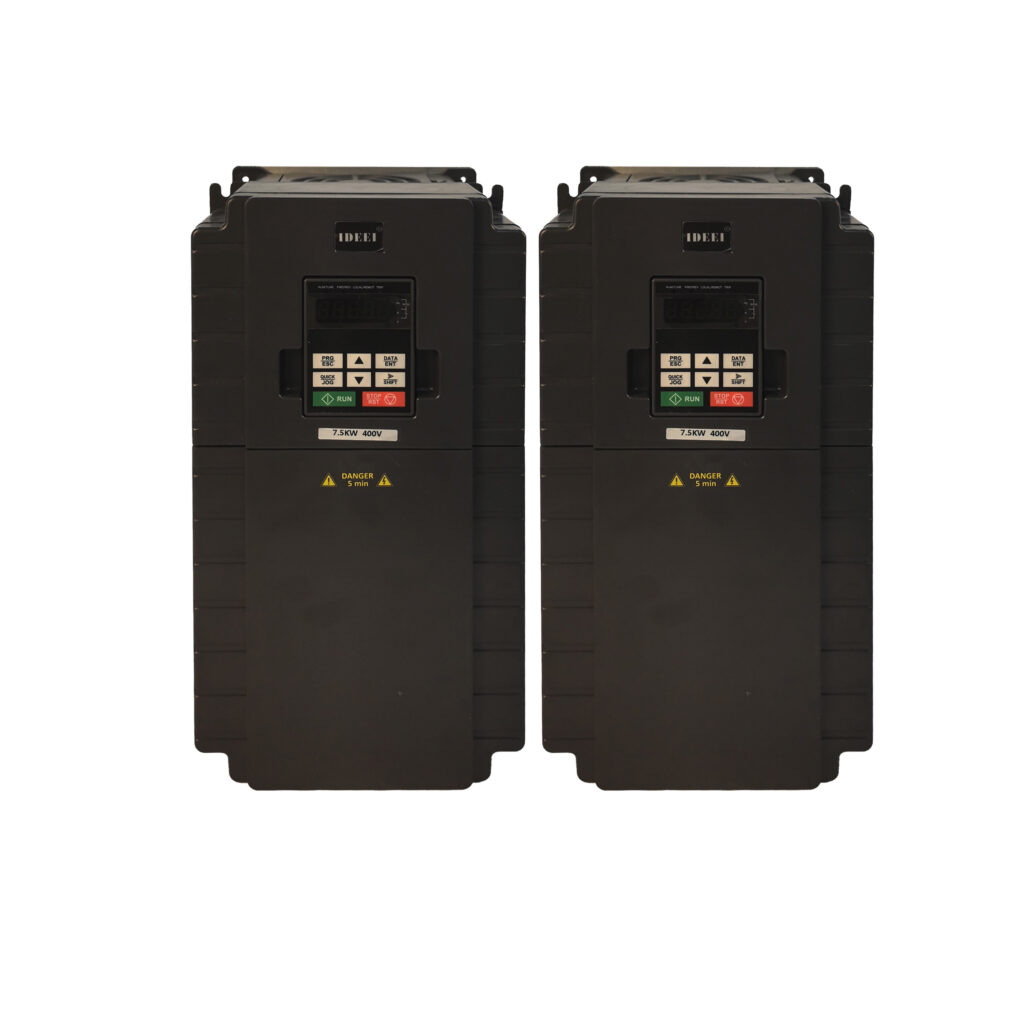
A solar pump inverter is the one component that decides how a solar pumping system behaves for the next decade. It converts DC power from your panels into controlled AC for the pump motor, tracks the maximum power point as sunlight changes, and protects the pump when the well runs dry or a cloud bank cuts the array output. Yet most buying decisions are still made on two numbers alone: kilowatts and price. That shortcut is how a 5.5kW pump ends up paired with an inverter whose DC input window the array can never reach, or a farm system that stops every afternoon because nobody checked the protection settings.
Knowing how to choose a solar pump inverter means working through seven factors in order: the motor, the array, the power class, the protections, the backup question, the installation environment, and the engineering support behind the selection. This refreshed guide keeps those seven factors, adds a comparison table and a step-by-step checklist, and expands the FAQ — so you can apply the same checks to any quote you receive.
Factor 1: Start with the Pump Motor — Power, Voltage and Phase
Every selection starts at the motor nameplate, not at the panel datasheet. Record four values: rated power in kW or HP, rated voltage, phase, and full-load current. The inverter must match the motor’s voltage and phase first. A 380V three-phase borehole pump cannot run from a 220V single-phase inverter, whatever the kilowatt rating promises, and a single-phase pump should not be forced onto a three-phase output without confirming the drive supports it.
On power, the working rule is one size up: choose an inverter roughly 25% above the motor’s rated power, or simply the next rating step. The margin covers starting current, hot pump houses that derate the drive, and the extra current an ageing pump draws. Matching one-to-one saves a little money on day one and buys nuisance trips for years. For the full sizing method, see What Size Solar Pump Inverter Do I Need?.
Factor 2: Match the MPPT Window to Your Solar Array
The second factor is the DC side. A solar pump inverter only delivers what its MPPT input can accept, so the array’s working voltage must sit inside the inverter’s MPPT window across the whole day, not just at noon. Check two numbers on any datasheet: the MPPT voltage range and the maximum PV input voltage. The string’s open-circuit voltage on the coldest morning must stay below the maximum, while the operating voltage under load must remain above the bottom of the MPPT window.
The IDEEI QB100-PV range shows how the windows shift by class: the 220V models work with a DC 180–450V input class, while the 400V three-phase models use DC 250–900V, and its MPPT tracking efficiency is rated up to 99%. As a sizing habit, plan the array at roughly 1.3 to 1.6 times the motor power in watts-peak, so the pump keeps a useful speed through the morning and afternoon instead of only at solar noon. For the series-count method, see How Many Solar Panels Do I Need for a Solar Water Pump?.
Factor 3: Choose the Power Class and Shell for the Site
Third, pick the power class and enclosure that fit the installation, because the same 15kW rating can live in very different hardware. For small wells and farms, the QB100-PV solar pump inverter (plastic shell, 0.4–37kW) covers three branches: 220V three-phase S2 models from 0.4 to 7.5kW, 220V single-phase SS2 models from 0.4 to 5.5kW, and 400V three-phase models from 0.75 to 37kW. Plastic-shell units suit pump houses and shaded wall mounting at this scale.
Above 37kW the QB100-PV line moves to an iron-shell platform rated 45–280kW for utility and large irrigation work. Treat the shell question as an environment question: heat, dust, humidity and mounting space decide more failures than the badge on the front panel. Where a cabinet is planned anyway, ask whether an IP54 cabinet version is offered for the model you are quoted.
Factor 4: Check the Protection Functions, Not Just the Rating
Fourth, read the protection list line by line. A solar pump lives unattended, so the drive has to defend the pump against the failures that actually occur in the field. Confirm in the datasheet for the exact model quoted whether dry-run, overvoltage, undervoltage, overload and short-circuit protection are listed, and how dry-run detection is set — a protection that cannot be configured for your well depth and pump curve is only a label.
Factor 5: Decide Whether You Need AC or Grid Backup
Fifth, settle the backup question before you order, because it changes the product family. A pure PV drive stops when the sun stops. If pumping must continue on cloudy days or at night, you need a model with AC or grid backup and a wiring plan that matches it. The IDEEI S80 solar pump inverter covers 0.75–200kW with automatic AC/DC switching, while the LX200 platform covers 0.4–500kW with PV as the main source and AC as backup depending on model and wiring — confirm the backup arrangement for the exact model, not the platform headline.
Factors 6 and 7: Monitoring, Enclosure and Engineering Support
Sixth, think about how you will know the system is working. Remote sites punish blind equipment: ask what monitoring, fault history and remote access the model offers, and whether a fault can be diagnosed without a site visit. Seventh, weigh the engineering support behind the selection. A supplier that checks your nameplate, head, flow and module data before quoting will catch the voltage-window and cable-length errors that a price-only quote misses.
Comparison Table: QB100-PV Branches at a Glance
| Motor class | PV input class | QB100-PV branch | Typical use |
|---|---|---|---|
| 220V single-phase | DC 180–450V | SS2, 0.4–5.5kW | Small wells, livestock, garden irrigation |
| 220V three-phase | DC 180–450V | S2, 0.4–7.5kW | Small farms, three-phase boreholes at 220V |
| 400V three-phase | DC 250–900V | 0.75–37kW | Commercial irrigation, larger boreholes |
| 400V three-phase, large | DC 250–900V | Iron-shell platform, 45–280kW | Utility and large irrigation work |
How to Choose a Solar Pump Inverter: A Seven-Step Checklist
- Record the motor. Power, voltage, phase and full-load current from the nameplate; convert HP with kW = HP × 0.746 where needed.
- Apply the one-size-up rule. Target roughly 25% above motor power, and use the high end for deep wells, long cables and hot sites.
- Match the MPPT window. Check string Vmp against the floor and cold-morning Voc against the ceiling for the 220V or 400V class.
- Size the array at 1.3–1.6 times motor power. Then re-check the series count — total watts alone do not prove the string will run.
- Confirm protections in writing. Dry-run, voltage and overload protection for the exact model quoted, not the platform brochure.
- Settle backup before ordering. Pure PV, or AC/grid backup with the correct model and wiring — S80 or LX200 where backup is required.
- Check support and site fit. Monitoring, enclosure, mounting space and a supplier check of nameplate, head, flow and module data.
Frequently Asked Questions
Can one solar pump inverter run different pumps?
Only within its ratings. An inverter can serve different pumps of the same voltage and phase class within its power and current limits, but it cannot be shared across voltage or phase classes, and the protection settings must be re-checked for each pump.
Is a bigger solar pump inverter always safer?
No. One size up is good practice; several sizes up wastes money and can make low-speed control and dry-run detection less accurate. Bigger is not a substitute for a correct voltage, phase and current match.
What data should I send for a recommendation?
Send the pump nameplate photo, motor power, voltage, phase and current, the well depth and required flow, and your PV module data. With those, a supplier can check the motor match, the string voltage and the array size in one pass.
Can I fix a wrong MPPT window by adding more panels in parallel?
No. This is the trap in array design. Parallel strings add watts, not string voltage. If the string voltage is below the MPPT floor, the series count itself must be corrected — within the cold-morning Voc ceiling — not the number of parallel strings.
Does AC backup mean I can skip array sizing?
No. Backup only covers the hours PV cannot. The array still has to deliver the pump at useful speed on solar hours, or the system will run on grid power far more often than planned and the PV investment will not pay back as expected.
What if I do not know my well head or flow yet?
Do not finalise a model from motor kW alone. Measure or estimate total dynamic head and daily water target first, because head and flow decide whether the pump — and therefore the inverter and array — are the right size at all.
Not sure which factor is limiting your project? Send IDEEI your pump nameplate, PV module data, head and flow target, and our engineers will run the seven checks for you. Contact IDEEI for a recommendation.