Every building manager knows the moment an elevator inverter starts asking for retirement: the complaints change tone. It stops being “the lift is a bit slow” and becomes “the lift frightened my tenant.” Drive modernization — replacing the ageing VFD and control electronics while keeping the machine, car and shaft — is the most cost-effective upgrade in the lift industry, typically restoring ride quality and reliability for a fraction of a full replacement. The hard part is timing: replace too late and you inherit breakdowns, trapped passengers and obsolete parts; replace at the right moment and the work is planned, brief and budgeted. These are the seven signs that the moment has arrived.
Signs 1–3: Ride Quality Problems Passengers Can Feel
1. Jerking, shudder and rollback. A healthy drive accelerates and decelerates on a smooth S-curve. When passengers feel a jolt at start, a shudder at levelling approach, or the car rolling back slightly before it moves, the drive’s control over the motor — especially at low speed — is deteriorating. Modern closed-loop drives hold the motor precisely through these transitions.
2. Leveling accuracy has drifted. A car that consistently stops a centimetre above or below the floor is not just an annoyance; it is a trip hazard and, in many jurisdictions, a compliance problem. Ageing drives lose the fine low-speed control that accurate levelling depends on, and no amount of mechanical adjustment holds the correction for long.
3. Noise and vibration are rising. Whining from the motor, vibration in the car and structure-borne hum in adjacent rooms often trace back to the drive: carrier-frequency limitations, worn output stages and control loops that excite mechanical resonance. Tenants notice noise before they notice anything else, and it colours their judgement of the whole building.
Signs 4–7: Faults, Parts, Energy and Risk
4. Nuisance trips and unexplained faults. A lift that faults weekly — overcurrent here, an encoder error there — with no consistent mechanical cause is telling you its electronics are at end of life. Capacitors age, boards drift, and intermittent faults are the most expensive kind because they cannot be reproduced on demand.
5. Spare parts are obsolete or cannibalised. When your service company starts sourcing boards from auction sites or donor units, the drive is already beyond supported life. One failed board can then mean weeks of downtime, not days.
6. Energy bills and machine-room heat. Older elevator drive system designs waste energy as heat — in braking resistors, in inefficient conversion, in a motor run harder than it needs to be. A modern lift inverter with proper vector control cuts both the electricity consumed per trip and the heat the machine room must shed.
7. The building’s expectations have moved on. Accessibility standards, tenant expectations and insurer scrutiny all rise over a lift’s life. A drive that was acceptable in 2005 may leave a hotel, hospital or residential tower exposed on ride quality, levelling accuracy and documented reliability — quite apart from whether it still technically runs.
What a Modern Elevator Inverter Actually Changes
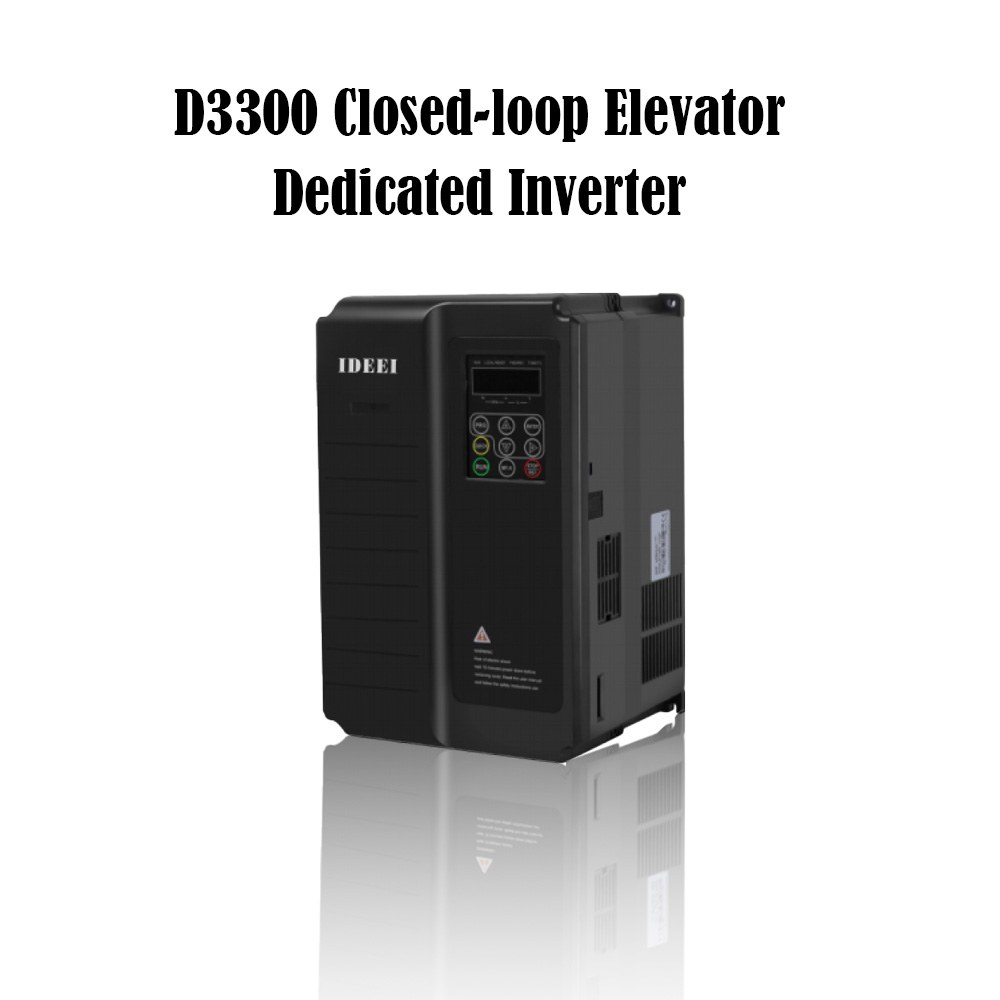
A current-generation drive such as the IDEEI D3300 closed-loop elevator inverter (2.2–45 kW) attacks the signs above at their root. Closed-loop vector control with encoder feedback holds torque at zero and low speed, which is where jerks, rollback and levelling errors are born. Programmable S-curve profiles let the ride be tuned to the building — gentle for a hospital, brisk for an office. Modern protection and self-diagnostics turn the old intermittent-fault lottery into logged, reproducible events a technician can actually fix. For many buildings, a drive-only modernization of this kind is the complete answer: the machine, ropes and car stay; the behaviour passengers feel is transformed.
Drive-Only Upgrade or an Integrated Elevator Controller?
Some projects should go one step further. If the relay logic or controller is as old as the drive, replacing both with a single integrated elevator controller — drive and control in one unit, such as the IDEEI 1K+ integrated elevator controller (2.2–55 kW) — reduces wiring, cabinet space and the interface faults that plague mixed old/new installations. The trade-offs:
| Drive-only upgrade (e.g. D3300) | Integrated controller (e.g. 1K+) | |
|---|---|---|
| Scope | Replace the VFD; keep existing controller | Replace drive + controller as one unit |
| Best when | Controller is sound; faults are drive-related | Controller is obsolete too, or wiring is deteriorated |
| Downtime | Shortest — often the quickest route back to service | Longer install, but a cleaner final system |
| Wiring & cabinet | Largely unchanged | Significantly simplified; one unit, one interface |
| Long-term | May face controller obsolescence later | Resets the clock on the whole control chain |
A competent survey decides between the two: if the controller boards are still supported and the fault history is drive-dominated, drive-only is the smart money. If both are ageing together, doing them separately usually costs more in total downtime than doing them once, together.
Planning the Project: Survey, Downtime and Budget Logic
A successful modernization starts with a survey, not a purchase order. The survey should record the existing drive and controller models, motor nameplate data, encoder type, fault history for the past year, and the ride-quality complaints in the building’s own words. With that file, a supplier can confirm compatibility — the D3300 covers geared and gearless machines in the 2.2–45 kW range, and the 1K+ integrated elevator controller covers 2.2–55 kW — and flag anything unusual before the lift is taken out of service.
On budget, the logic is straightforward. A planned drive modernization is priced as parts plus a defined installation and commissioning scope, executed in a scheduled window. An unplanned failure is priced as emergency callouts, expedited or cannibalised parts, tenant compensation and reputational damage — with the same replacement drive still to buy at the end of it. Buildings that modernize on the evidence of the seven signs almost always spend less in total than buildings that wait for the breakdown, and they spend it on their own schedule. For multi-lift properties, modernizing one lift per budget cycle spreads cost while keeping at least one car in service, and each completed lift becomes the demonstration unit that justifies the next.
How to Decide on Elevator Drive Modernization Steps
Count the signs, then decide in this order.
- Record which signs are present and how often they occur.
- Survey the drive, motor, encoder and controller together.
- Choose drive-only or integrated control from the survey.
- Confirm open-loop or closed-loop and the PG card needed.
- Plan downtime, tuning and commissioning before ordering.
Related: Elevator Retrofit; Closed-Loop Cost; Commissioning Checklist; Old Drive Replacement.
Frequently Asked Questions
How long does an elevator drive modernization take?
A drive-only replacement on a single lift is typically a matter of days including tuning and testing; an integrated controller conversion takes longer because of rewiring and commissioning. Either is far shorter than a full lift replacement, and the lift can usually be returned to service between stages on multi-lift sites.
Can we modernize the drive without replacing the motor?
Usually, yes. Modern closed-loop drives can be tuned to existing geared and gearless machines, provided the motor itself is mechanically and electrically sound. A pre-project survey should confirm motor condition and encoder compatibility before the drive is specified.
Open-loop or closed-loop for an older lift?
Closed-loop, wherever an encoder can be fitted. The ride-quality problems that trigger modernization — rollback, jerking, levelling drift — are precisely the ones open-loop control cannot fully suppress. Closed-loop is the standard choice for passenger lifts in modernization work.
Should we replace the drive as soon as one sign appears?
Not necessarily. One intermittent sign calls for a survey and a fault history first. Several signs together, or obsolete parts, make the case for modernization much stronger.
Does a new drive fix a worn motor or a faulty controller?
No. A drive modernization does not repair a mechanically worn motor or an obsolete controller. The survey must separate drive faults from motor and controller faults before any drive is specified.
Is the cheapest drive with the same kW always a safe replacement?
No, this is the trap. The same kW can hide a different current rating, encoder interface or control wiring. The replacement must match the motor nameplate, encoder and controller, not kW alone.
Recognising these signs in your building? IDEEI supplies the D3300 closed-loop drive and the 1K+ integrated elevator controller for modernization projects through distributors and lift service companies worldwide, backed by a 2-year warranty. Send us your current drive model, motor data and fault history for an upgrade recommendation. Contact IDEEI for modernization advice.