
Every lift drive eventually reaches the point where repair stops making sense. The symptoms usually build slowly: a trip here, a rough stop there, a maintenance company that starts sentences with “the problem is, parts for this model…”. This guide sets out the signs that an elevator inverter replacement is due, the replacement options from like-for-like to a full control upgrade, and what a modernization budget is actually made of, so you can judge any quotation line by line instead of arguing about the total. For the broader picture, it pairs with our earlier article on elevator drive modernization and the signs a lift VFD needs an upgrade; here we focus on the replacement decision itself.
Six signs the drive is at end of life
- Repeat faults with no root cause found. Occasional trips happen; the same drive tripping weekly after resets, with wiring and motor already checked, is a drive telling you its power stage or control board is failing intermittently.
- The model is obsolete and unsupported. When the original maker has discontinued the series, spare boards become second-hand gambles and every breakdown carries open-ended downtime.
- Ride quality and levelling keep drifting. If levelling accuracy wanders between floors and re-tuning only holds it for a few weeks, the drive is losing the stable control it once had.
- Heat, noise and smell. A drive that runs its fans constantly, whines under load or smells of hot electronics in the machine room is working harder than it should to do the same job.
- Repairs are stacking up. Add the last two years of call-outs and board repairs together. When that running total approaches a significant share of a new drive, replacement is the cheaper option even before downtime is counted.
- The building has changed around it. Higher traffic, new accessibility expectations or a controller upgrade elsewhere in the system can leave an old drive as the weak link even if it still runs.
Repair or replace? A quick decision frame
Repair makes sense when the fault is identified, the part is genuinely available, and the drive is otherwise stable and supported. Replace when any two of the signs above are present, when downtime itself is the expensive part (hotels, hospitals, residential towers with a single lift), or when the existing drive cannot support the control features the building now needs, such as closed-loop levelling quality. One more consideration: a replacement drive is also the moment to fix long-standing ride complaints, because the new drive will be re-commissioned from scratch anyway.
Your replacement options
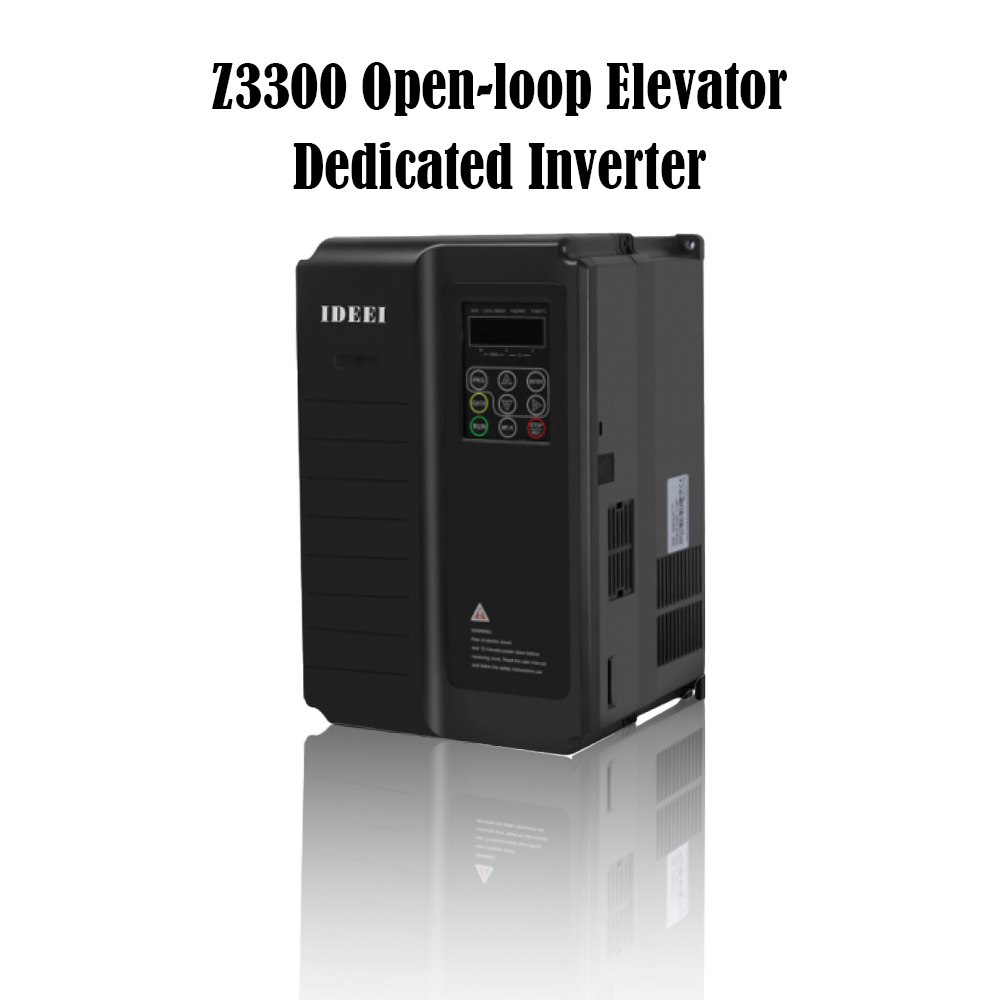
Like-for-like open-loop replacement. The simplest path: swap the failed drive for a modern open-loop unit of the same power class, reusing the motor, encoder arrangement (none, in open-loop) and most wiring. On the IDEEI range, the Z3300 open-loop models within the Z3300 and D3300 elevator inverter family cover 2.2-45kW, with RS485 communication available for controller integration.
Upgrade to closed-loop. If the motor has (or can accept) an encoder, a closed-loop replacement such as the D3300 models on the same page adds encoder feedback: better low-speed torque, more consistent levelling and a noticeably calmer ride. This is the right choice for gearless and synchronous machines and for buildings where levelling complaints are part of the reason for replacing. Closed-loop models do not include the PG card in the base price: the PG card is an option, priced separately, chosen to match the encoder type fitted.
Dedicated lift drive platforms. For integrated lift control projects, the 11LIFT elevator inverter range (2.2-37kW) supports both open-loop and closed-loop operation in one platform, which simplifies spares and lets a site standardise on one drive family across mixed machines. As with the D3300, PG cards for closed-loop feedback are optional and priced separately.
What a modernization budget is actually made of
Quotations differ because scopes differ. A complete replacement budget is built from these components, and comparing two quotes means checking which of them each one includes:
- The drive unit itself, sized to the motor with the usual service margin.
- PG card and encoder items for closed-loop work, priced separately from the drive: the card must match the encoder fitted on the machine, and reusing a healthy existing encoder is legitimate if it is compatible.
- Control cabinet work: mounting, adapting the backplate, integrating with the existing controller, and updating cabinet wiring where the old drive footprint or terminals differ.
- Wiring and materials: power and motor cables if degraded, shielded encoder cable for closed-loop, terminals, trunking and labelling.
- Commissioning: motor data entry, auto-tuning, travel curve setup, levelling adjustment floor by floor, and safety-function checks. This line is skilled time, and cutting it shows up as ride complaints later.
- Downtime of the lift: not an invoice line, but a real cost. A planned replacement done in one scheduled visit is almost always cheaper for the building than repeated emergency outages, and the schedule belongs in the quotation discussion.
Questions to ask before you accept a quote
Which scope items above are included, and which are excluded? Is the PG card included for closed-loop, and does it match our encoder? Is commissioning, including levelling adjustment on every floor, part of the price? What is the planned out-of-service window, and what happens if the old controller needs interface work once opened up? A supplier who answers these cleanly is pricing the whole job; one who cannot is pricing the drive and leaving the rest to surface later.
Frequently asked questions
Can we replace just the drive and keep the old controller and motor?
Usually yes. Drive-only replacement is the most common modernization scope: the new drive must match the motor power and type, and its control terminals or RS485 interface are integrated with the existing controller during commissioning. The motor and controller are replaced only when their own condition demands it.
Is closed-loop worth it on a replacement?
If the machine and duty suit it, yes: encoder feedback is the single biggest ride-quality and levelling improvement a drive swap can deliver. It does add the PG card as a separate cost item and needs a compatible encoder, so it is a deliberate choice rather than a default, which is why both open-loop and closed-loop options exist in the same ranges.
How long does a replacement take?
The physical swap is normally the short part; integration and commissioning take the rest, and floor-by-floor levelling checks cannot be rushed. Your installer should quote the out-of-service window as part of the job, and planning it for the building quietest period is worth more than shaving the hardware price.
Send us the failed drive model, motor nameplate and a photo of the encoder if one is fitted, and we will specify the replacement, open-loop or closed-loop, with the PG card matched: contact the IDEEI team.