
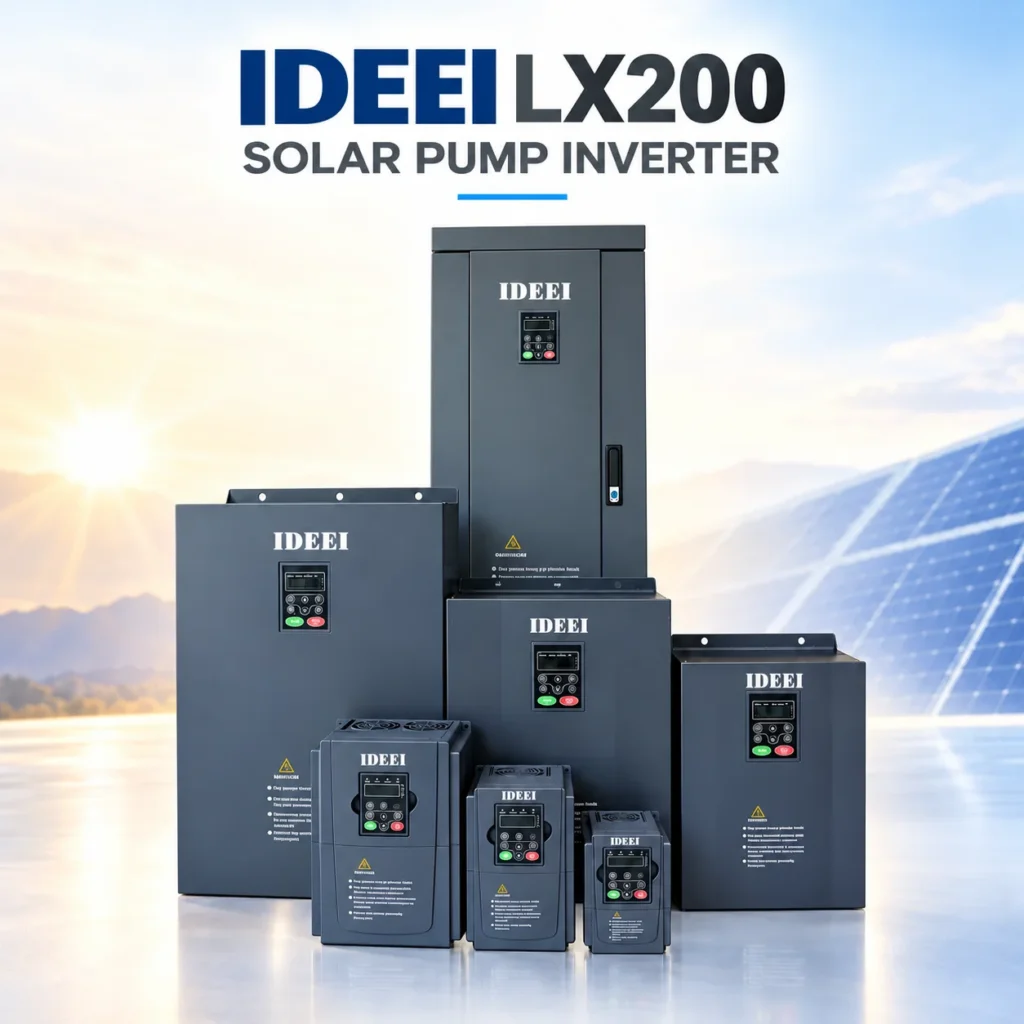
Livestock watering is one of the most forgiving jobs in solar pumping, and one of the most valuable. Cattle and sheep drink on their own schedule, troughs empty and refill all day, and nobody wants to drive out to a remote paddock twice a day to start a generator. A solar pump fills a tank whenever the sun is up, the tank feeds the troughs by gravity, and the system runs unattended for weeks. This guide covers the borehole-to-tank layout, sizing by herd, level control and the protections that make livestock watering genuinely hands-off.
Why solar pumping fits livestock so well
Water demand on a farm peaks in hot weather, which is exactly when a solar array produces most. Unlike irrigation, which often needs water at specific times, livestock watering is storage-based: animals drink from troughs, troughs are fed from a tank, and the tank only needs to be full by evening. That means the pump can work whenever power is available, with no batteries and no fixed schedule. The storage is water, not electricity, and a tank is far cheaper per day of autonomy than any battery bank.
The borehole-to-tank layout
The standard arrangement is simple: a submersible pump in the borehole lifts water to an elevated or hillside tank during sun hours, and gravity does the distribution work from there. The LX200 solar pump inverter platform (0.4-500kW) suits this pattern well because it is built around unattended pumping: MPPT-based control follows the available solar power through the day, and pump-oriented protection handles the borehole side while level sensors handle the tank side. For the deep-borehole specifics of pump and head selection, see our guide to a solar pump inverter for deep well systems; this article focuses on the livestock layout above ground.
Sizing by herd, not by pump catalogue
Start from the animals, not the hardware. Estimate peak summer daily demand for the whole herd, with margin for hot spells when consumption rises and borehole yield can fall, then choose a pump and array combination that delivers that volume inside the useful sun window with room to spare. Size the tank for at least two to three days of demand: the tank carries the herd through cloudy weather, and a generous tank turns marginal sunny days into full recovery days. On large stations with several watering points, a single bigger drive filling a header tank is usually easier to manage than scattered small systems, which is where the QB100-PV iron-shell range (45-280kW) and the upper LX200 models come in.
Level control: the part that makes it unattended
Two sensors run the whole system. A level sensor or float switch in the tank stops the pump when the tank is full and restarts it when the level drops, so the pump never overflows the tank and never short-cycles against a full one. A water-level sensor in the borehole, together with the inverter dry-run protection, stops the pump if the borehole draws down, and restarts it after the water recovers. The IDEEI pump inverters support water-level sensor control as part of their pump-oriented protection set, which is what removes the daily visit: the system protects the pump, the borehole and the tank by itself, and simply resumes when conditions allow.
Remote monitoring for far paddocks
The watering point that matters most is usually the one furthest from the house. LX200 systems offer optional GPRS, 4G or WiFi remote monitoring, so running state and faults can be checked without a site visit, and multi-pump control is supported where a station runs more than one borehole or transfer pump. Even without monitoring, design for silence: a solar livestock system should fail safe (pump stopped, tank holding its reserve) rather than fail running, and that is exactly what the protection set above is arranged to do.
Maintenance reality check
Unattended does not mean unvisited. Put these on a seasonal list: clean the array (dust directly cuts pumping hours), check sensor cables and float switches for stock damage and corrosion, flush sediment from the tank outlet, and inspect trough valves before summer. None of it needs a technician, and a system sized with the margins described above tolerates a missed month far better than one sized to the edge.
Frequently asked questions
Do I need batteries for livestock watering?
No. The tank is the storage. Pumping only happens in daylight, but the herd drinks from the tank around the clock, and two to three days of tank reserve covers cloudy spells. Batteries add cost and maintenance without adding water.
What if the borehole runs dry in a drought?
The borehole level sensor and dry-run protection stop the pump before it damages itself, and restart it when the water level recovers. The tank reserve covers the herd in the meantime. If drought drawdown is a known issue, size for it at design time with a deeper set pump and a larger tank.
How big a system does a large station need?
It scales with herd size and distance, not with a fixed rule. Small herds run comfortably on the lower LX200 models; large stations filling header tanks for multiple trough lines move into the tens of kW, where the QB100-PV 45-280kW iron-shell range applies. Send us your herd numbers and borehole depth and we will size it properly.
Tell us your herd size, borehole depth and tank position, and we will put together a watering system design that runs itself: contact the IDEEI team.